

2026 Toyota Tacoma vs. 2026 Toyota Tundra: Which Toyota Truck Should You Buy?
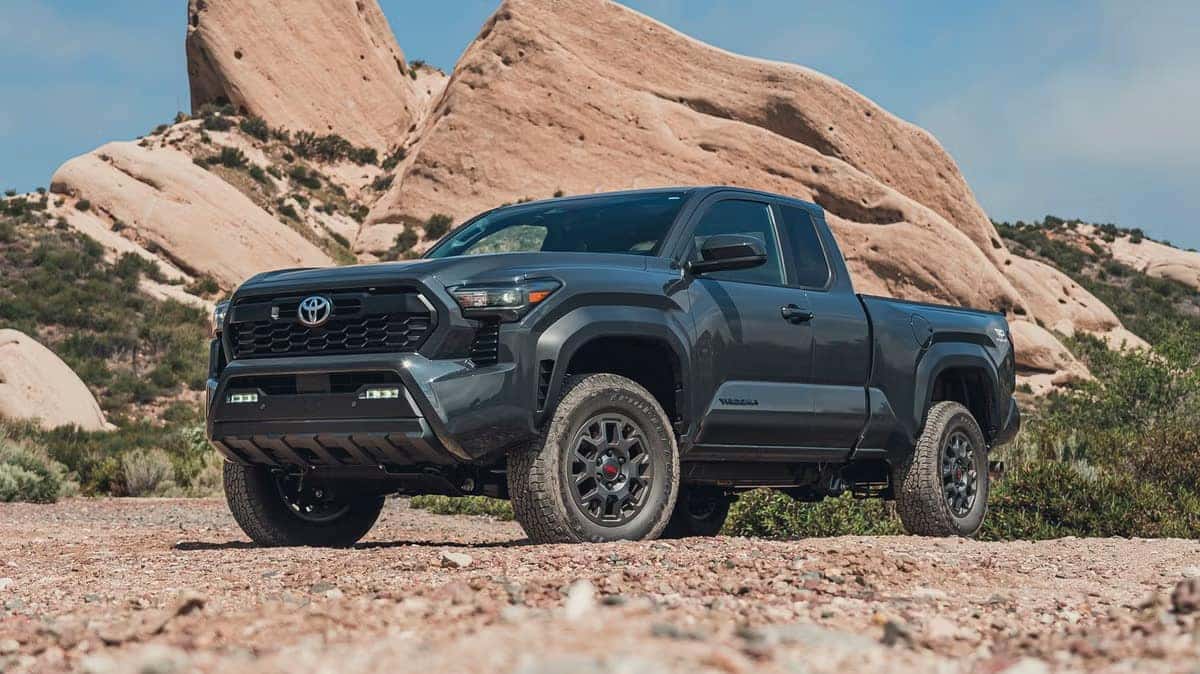
The Tacoma-versus-Tundra question comes up constantly at Classic Toyota in Tyler. Both trucks are genuinely excellent, and either one will serve you well for years. The real question, in this 2026 Tacoma vs. 2026 Tundra comparison, is which one fits how you actually live and work. It’s less about which truck is objectively better and more about what you’re asking yours to do. Browse our 2026 Tacoma inventory to start narrowing it down.
These two trucks occupy distinct spots in Toyota’s lineup. The Tacoma is a midsize pickup built for maneuverability, off-road confidence, and practical everyday use. The Tundra is a full-size truck engineered around maximum towing power, cabin space, and a commanding road presence. Put them side by side across performance, size, fuel economy, and comfort, and the differences become clear fast.
Performance and Powertrain: How the 2026 Tacoma and Tundra Stack Up
Both trucks come with modern, capable powertrains, but they’re tuned for very different jobs. The Tacoma leans toward efficiency and versatility; the Tundra is built around raw towing muscle.
2026 Tacoma Engine Options and Towing Capability
The 2026 Tacoma runs a 2.4L turbocharged four-cylinder. Base SR configurations produce 228 hp and 243 lb-ft of torque. Higher trims step up to 278 hp and 317 lb-ft. For buyers who want the strongest balance of power and efficiency, the i-FORCE MAX hybrid delivers 326 hp and 465 lb-ft of torque. Maximum towing reaches up to 6,500 lbs when properly equipped, which covers boats, loaded utility trailers, and small campers on East Texas backroads without much trouble.
That towing range handles most recreational and light-work scenarios comfortably. If you’re not regularly pulling large trailers on I-20 or hauling construction equipment, the Tacoma’s capability rarely becomes a limitation.
2026 Tundra Engine Options and Towing Capability
The Tundra steps things up considerably. Its 3.4L twin-turbo V6 produces 358 hp and 406 lb-ft in SR trim, climbing to 389 hp and 479 lb-ft in higher trims. The i-FORCE MAX hybrid pushes that further, to 437 hp and 583 lb-ft. Maximum towing reaches up to 12,000 lbs on certain SR5 configurations when properly equipped, while the i-FORCE MAX hybrid tows up to 11,450 lbs.
If your truck regularly pulls a fifth-wheel camper, a large boat, or a loaded equipment trailer on US-69, those numbers make the decision pretty straightforward. Toyota also spec’d the Tundra with a standard 32.2-gallon fuel tank, which extends range meaningfully on longer hauls.
Size and Capability: Choosing the Right Amount of Truck
Standing next to both trucks, the size difference is immediately obvious. The Tacoma comes in XtraCab and Double Cab configurations. Its compact footprint makes parking easier around town, keeps it manageable on narrow trails, and gives it a more approachable feel for daily driving in Tyler.
The Tundra is a full-size truck in every sense, available in Double Cab and CrewMax configurations. You get a wider cabin, more shoulder room, significantly more rear legroom, and a larger cargo bed. If your work or lifestyle demands maximum cargo capacity and tight spaces aren’t a concern, the Tundra’s extra size is a genuine advantage. For most recreational and light-work needs, though, the Tacoma offers enough bed space without the larger footprint to manage.
Fuel Economy: 2026 Tacoma vs. Tundra MPG in the Real World
Fuel economy shapes your cost of ownership quietly over time. The Tacoma’s standard 2.4L turbo returns 20-21 city and 26 highway MPG. The i-FORCE MAX hybrid version delivers up to 22 city and 24 highway MPG. For someone commuting daily around Tyler, those numbers keep fuel costs manageable.
The Tundra’s gasoline engine returns 18 city and 23 highway MPG, depending on trim and configuration. The i-FORCE MAX hybrid improves that to up to 20 city and 24 highway MPG, which is a meaningful gain for a full-size truck. The hybrid Tundra narrows the gap with the Tacoma on the highway, but the Tacoma still holds a clear advantage in city driving where stop-and-go traffic hits larger engines harder. If efficiency is a top priority, the Tacoma leads. If you need the Tundra’s capability, at least the hybrid softens the trade-off.
Interior, Technology, and Everyday Comfort
Both trucks deliver well-designed interiors with modern materials and intuitive layouts, but they’re aimed at different types of drivers. The Tacoma’s interior is practical and driver-focused. The Tundra prioritizes space and available premium features.
Cabin Space and Passenger Experience
The Tacoma’s Double Cab offers reasonable rear-seat room for adults on shorter trips. The Tundra’s CrewMax cab delivers genuinely generous rear space, making it the better pick for families or anyone regularly transporting a full crew to a job site.
For solo drivers or couples, the Tacoma feels comfortable and well-appointed without feeling oversized. On longer hauls with multiple adults, the Tundra is simply more comfortable for everyone on board. ISO Dynamic seats are available as an option on the Tundra TRD Pro, and Capstone and Limited trims bring premium leather throughout.
Infotainment, Safety Tech, and Toyota Safety Sense
Both the 2026 Tacoma and Tundra come standard with wireless Apple CarPlay, Android Auto, and Toyota Safety Sense. The Tacoma runs Toyota Safety Sense 3.0, which includes enhanced pedestrian, bicyclist, and motorcyclist detection, improved lane recognition, and full-speed dynamic radar cruise control.
The Tundra comes standard with Toyota Safety Sense 2.5, which covers pre-collision warning with pedestrian detection, lane departure alert, automatic high beams, and radar cruise control. Both provide a strong active safety foundation, but buyers cross-shopping the two should know the Tacoma carries the more advanced suite.
The Tundra’s upper trims add a 14-inch touchscreen and towing aids that make managing a heavy trailer significantly easier. The Tacoma’s higher trims prioritize off-road navigation and terrain management tools, which fits its adventure-focused personality well. Check out both our 2026 Tacoma inventory and 2026 Tundra inventory to see which tech packages are available on current stock.
Trim Levels: Matching the Right Configuration to Your Needs
The Tacoma’s lineup covers a wide range of buyer profiles. TRD Off-Road, TRD Pro, and Trailhunter trims serve dedicated off-road drivers, while other configurations work well for daily commuters and light-duty workers. The i-FORCE MAX hybrid powertrain is available across multiple trim levels.
The Tundra follows a similar structure, running from the base SR through TRD Pro and up to the Capstone trim, which delivers near-luxury cabin features. The i-FORCE MAX hybrid is available on the Tundra as well. Across comparable trims, pricing reflects the Tundra’s larger size and more powerful hardware.
Which Toyota Truck Fits Your Life?
Choose the Tacoma if:
- You want a capable daily driver that handles both commuting and weekend trail use.
- Your regular towing needs fall under 6,500 lbs, think boats, utility trailers, or small campers.
- Fuel efficiency and maneuverability on tighter East Texas roads matter to you.
- Off-road performance is a priority and you want access to TRD Off-Road, TRD Pro, or Trailhunter trims.
- You want a midsize footprint without sacrificing modern tech, including Toyota’s most advanced Safety Sense 3.0 suite, or Toyota’s long-term reliability.
Choose the Tundra if:
- You regularly tow heavy loads, fifth-wheels, large boats, or equipment trailers over 6,500 lbs.
- You need a CrewMax cab for comfortable long-distance travel with a full family or work crew.
- Maximum power matters, whether from the twin-turbo V6 or the i-FORCE MAX hybrid.
- You want access to premium features like a 14-inch display, optional ISO Dynamic seats on TRD Pro, or Capstone-level interior quality.
- Full-size truck presence and cargo volume are non-negotiable for your work or lifestyle.
Frequently Asked Questions About the 2026 Tacoma and Tundra
Is the 2026 Tacoma good for towing? Yes, within its class. The 2026 Tacoma tows up to 6,500 lbs when properly equipped. The i-FORCE MAX hybrid version, with 465 lb-ft of torque, handles that load confidently. It’s well-suited for boats, utility trailers, and small campers. If you regularly tow beyond that range, though, the Tundra is the better fit.
Which is more reliable, Tacoma or Tundra? Both trucks carry Toyota’s long-term dependability record, and either one represents a sound investment. The Tacoma has historically ranked among the most reliable midsize trucks on the market. The Tundra brings that same build quality to the full-size segment. Honestly, reliability shouldn’t be the deciding factor here. Use case should be.
Is the 2026 Tacoma or Tundra better for off-roading? The Tacoma has the edge for dedicated trail use. Its smaller size, purpose-built suspension, and access to TRD Off-Road, TRD Pro, and Trailhunter trims make it more capable on technical terrain. The Tundra’s TRD Pro is a serious off-road truck, but its larger dimensions make tight trail navigation more challenging.
What MPG does the Tundra hybrid get near Tyler, TX? The 2026 Tundra with the i-FORCE MAX hybrid returns up to 20 city and 24 highway MPG. For mixed driving around Tyler and across East Texas, real-world figures typically land somewhere in between. That’s a meaningful improvement over the non-hybrid Tundra, especially on longer highway stretches.
Test Drive the 2026 Tacoma and Tundra at Classic Toyota in Tyler
Reading specs is helpful, but nothing replaces time behind the wheel. Getting both trucks side by side in person and feeling how each one handles Tyler’s roads makes the decision much easier. At Classic Toyota, we carry both in a range of trims and configurations. Explore our current inventory or stop by at 1717 W SW Loop 323 in Tyler. Give us a call at 903-581-0600 or reach out online to schedule your test drive. Whether the Tacoma or Tundra turns out to be the right fit, we’ll make sure you leave with the truck that works for you.
0 comment(s) so far on 2026 Toyota Tacoma vs. 2026 Toyota Tundra: Which Toyota Truck Should You Buy?