

2025 Toyota Tacoma vs. Chevrolet Colorado for Texas Terrain
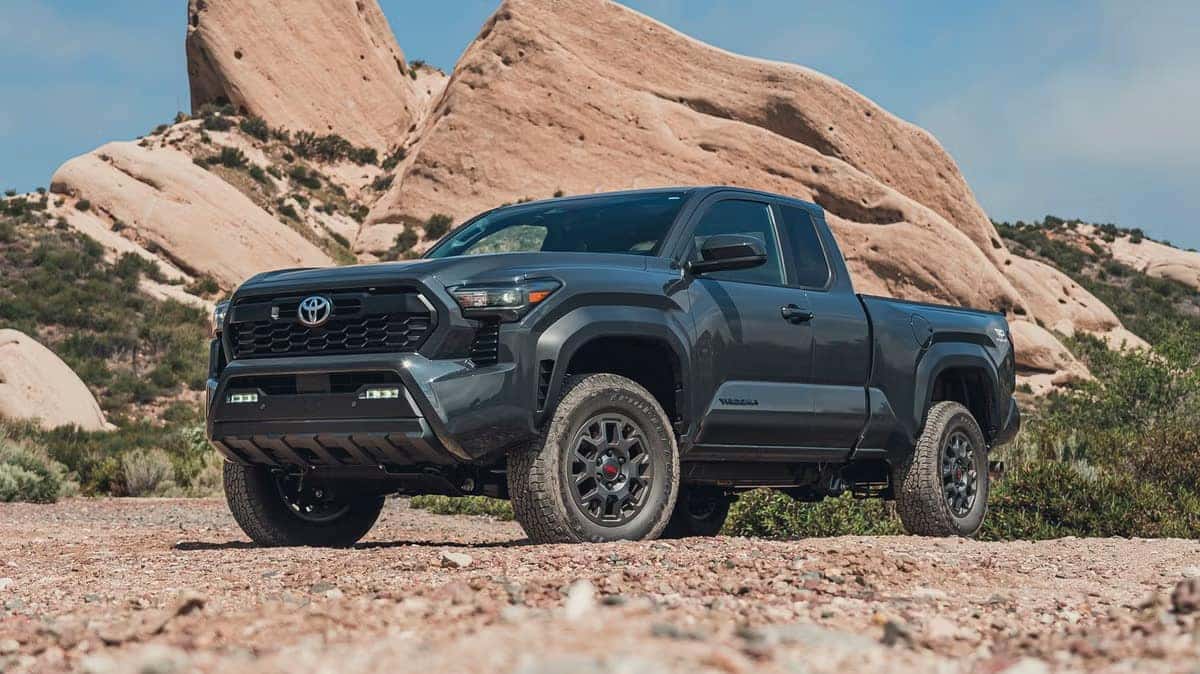
Shopping for a midsize pickup in Texas? You’ve probably got the Toyota Tacoma and Chevrolet Colorado on your shortlist. Both trucks can handle whatever Texas throws at them, but they take different approaches to conquering our state’s demanding terrain. From rocky Hill Country trails to muddy East Texas backroads, picking the right truck means understanding how each one performs where it counts.
Power and Performance: Tackling Texas Terrain
Let’s dig into the performance details that define these two impressive trucks.
Engine Specs
The 2025 Colorado base TurboMax engine packs a punch with 310 horsepower and 430 lb-ft of torque, while the 2025 Tacoma’s i-FORCE 2.4-liter engine puts out up to 278 horsepower and 317 lb-ft of torque. That power difference only results in a minor sprint margin; the Colorado ZR2 hits 60 mph in 6.8 seconds compared to the Tacoma’s 7 seconds.
Towing Capacity and Payload
Towing capacity can have a big impact if you’re hauling boats to Lake Travis or pulling trailers across ranch land. The Colorado’s maximum towing reaches 7,700 pounds versus the Tacoma’s 6,500 pounds — that’s a 1,200-pound advantage for heavy-duty hauling. However, the Tacoma can tow up to 6,400 pounds in TRD configurations, while the Colorado ZR2 drops to 6,000 pounds. For payload, both trucks provide ample capacity, though figures vary across models and trim levels.
Fuel Economy
Gas mileage matters a lot for Texas drivers covering long distances between cities or across ranch properties. The Tacoma wins here, with EPA estimates of 21 mpg city and 26 mpg highway for rear-wheel-drive models. Thanks to an optional hybrid powertrain, you can get up to 23 mpg city and 24 mpg highway with four-wheel drive.
The Colorado’s fuel economy changes more dramatically — rear-wheel-drive models get 19 mpg city and 23 mpg highway, while four-wheel-drive versions drop to 17 mpg city and 20 mpg highway. The Colorado ZR2 really suffers at just 16 mpg across all driving conditions, making it much less economical than the Tacoma TRD Off-Road’s 19 mpg city, 23 mpg highway, and 21 mpg combined ratings.
Off-Road Capability
The 2024 Tacoma scored a 489-point ramp travel index compared to the 2023 Colorado’s 461 points. The Toyota’s Adaptive Variable Suspension with multilink rear suspension counters the Colorado ZR2’s Multimatic DSSV dampers. Both trucks offer multiple drive modes — up to six in the Tacoma and five in the Colorado — with off-road performance displays to help you tackle challenging Texas terrain.
Design and Functionality: Bringing Style to the Lone Star State
When comparing these trucks, you’ll find different design philosophies at work both inside and out.
Infotainment Setup
The 2025 Tacoma offers either an 8-inch or optional 14-inch touch screen with wireless Apple CarPlay and Android Auto. The available upgraded JBL sound system has a removable speaker for outdoor use, which is handy for tailgating or campsite tunes. The Colorado counters with a larger standard 11.3-inch display (no upgrade option), wireless smartphone connectivity, and Google built-in, along with an optional Bose sound system.
Interior Comfort and Space
The Tacoma includes heated cloth or leatherette seats, a heated steering wheel, and a power-sliding rear window. The Colorado offers heated cloth or leather seats and programmable heated seat activation. Both trucks have the option of single- or dual-zone climate control, as well as remote start.
For passenger space, the 2025 Colorado crew cab provides 45.2 inches of front legroom and 34.7 inches of rear legroom, compared to the 2025 Tacoma double cab’s 41.8 inches in the front and 33.7 inches in the rear. The Tacoma’s back seat feels tighter than in most trucks of this class, but Toyota makes up for it with storage solutions. The 60/40-split rear bench can tip forward to act as a shelf or up to store items underneath.
Bed Design and Exterior Functionality
The Tacoma features a 5- or 6-foot plastic bed that resists damage and won’t rust, while the Colorado uses steel construction with a factory spray-in bedliner. The Colorado only offers a 5-foot bed, which is fractionally wider than the Tacoma’s. Either truck will give you plenty of cargo space for tools, equipment, and supplies.
The Tacoma offers extra utility features, including an onboard air compressor, 120-volt onboard AC inverter, prewired auxiliary switches, and exterior LED scene lighting with aluminum-reinforced sheet-molded composite bed construction.
Safety Ratings
The 2025 Colorado earned National Highway Traffic Safety Administration ratings of four out of five stars for frontal crash, five stars for side crash, and three stars for rollover, while the 2025 Tacoma earned three stars for frontal crash and five stars for side crash (rollover is not yet rated). However, the Toyota pickup secured a 2024 Top Safety Pick recognition from the Insurance Institute for Highway Safety. The Tacoma’s shorter braking distance of 171 feet from 70 mph, compared to the Chevrolet’s 187 feet, also provides a safety advantage for Texas highway driving.
Value Considerations
When weighing these two truck candidates, it’s important to consider the initial investment price and long-term cost of ownership.
Pricing for New Models
Pricing structures reveal why both trucks remain competitive in the Texas market. With five trims, the 2025 Colorado starts at $31,900 for the base WT configuration, and the top ZR2 model reaches $49,600. The 2025 Tacoma starts slightly lower at $31,590, with the gas-only Limited starting at $52,955 and the TRD Pro reaching $64,135. It comes in 11 unique models, including both gas and hybrid powertrains, letting you choose your ideal setup and price point.
Long-Term Value and Reliability
Long-term value heavily favors the Toyota Tacoma. According to iSeeCars.com, the Tacoma leads all trucks in resale value with 73.7% retention after five years, compared to the Colorado’s 57.7% retention rate. Reliability rankings support Toyota’s reputation; the brand ranks fourth in J.D. Power reliability studies while Chevrolet ranks sixth. Consumer Reports shows an even wider gap, placing Toyota third for reliability while Chevrolet ranks 16th among all brands.
Maintenance Costs and Warranty Coverage
Projected ownership expenses also favor the Tacoma over the long haul. RepairPal estimates the Tacoma’s annual maintenance costs at $478, which compares favorably to the Colorado’s $599. The standard ToyotaCare plan offers two years or 25,000 miles of complimentary maintenance coverage, covering oil changes, tire rotations, and more. Both trucks offer identical warranty coverage with three years or 36,000 miles bumper-to-bumper and five years or 60,000 miles powertrain protection.
Making Your Choice: The Best Truck for Texas Drivers
While the Colorado offers more power and capability in some areas, the Tacoma proves a great choice if you value long-term ownership, fuel efficiency, and proven reliability. When you’re ready to experience the Tacoma firsthand and get expert guidance tailored to your specific Texas driving needs, visit us at Classic Toyota Tyler. You’ll benefit from a comprehensive test-drive and personalized recommendations from our knowledgeable team. We’re here to help you analyze all the trim levels, and our finance department is ready to make your dream Tacoma purchase a reality.
0 comment(s) so far on 2025 Toyota Tacoma vs. Chevrolet Colorado for Texas Terrain