

2025 Toyota 4Runner vs Ford Bronco
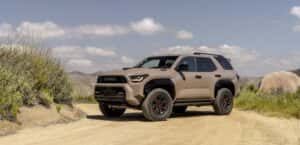
The 2025 Toyota 4Runner and Ford Bronco are two of the most capable off-road SUVs around With the 4Runner getting an exciting redesign this year, the time seems right for a comparison with its rival. In this 2025 Ford Bronco vs. 2025 Toyota 4Runner review, our team at Classic Toyota in Tyler, Texas, digs into what makes these SUVs tick to help you figure out which one might suit your adventure style better.
Performance and Engine Comparison
Let’s start by comparing the 4Runner vs. Bronco engines and performance. The 2025 4Runner offers two powerplants: a base i-FORCE 2.4-liter turbocharged four-cylinder engine making 278 horsepower and 317 lb-ft of torque, plus an i-FORCE MAX hybrid delivering 326 horsepower and 465 lb-ft of torque.
The hybrid system gives you electric-only driving at low speeds, handy for quiet morning departures from neighborhoods or campgrounds without waking everyone up, and it’s powerful enough for any East Texas terrain. Better yet, the hybrid gets 23 mpg city and 24 mpg highway, while the gas model gets up to 20 mpg in the city and 26 mpg on the highway — impressive for a vehicle this size.
The 2025 Ford Bronco provides three engine options. The base 2.3-liter EcoBoost makes 300 horsepower and 325 lb-ft of torque, while the 2.7-liter V-6 gets 330 horsepower and 415 lb-ft of torque. The Bronco Raptor’s 3.0-liter EcoBoost V-6 seriously ups the ante with 418 horsepower and 440 lb-ft of torque. All use turbocharging and direct injection, though they can’t match the 4Runner’s hybrid efficiency.
The Bronco’s fuel economy lags behind the 4Runner, with the 2.3-liter engine and automatic transmission getting 18 mpg in the city and 22 mpg on the highway, while the Raptor only gets 15 mpg in the city and 16 mpg on the highway. This could be a drawback if you make frequent trips to Dallas or Houston from East Texas.
Toyota’s updated suspension delivers a smoother ride, especially on rougher country roads, while Ford offers Goes Over Any Type of Terrain, or G.O.A.T., Modes for off-road control — handy when tackling muddy trails after East Texas rainstorms. In acceleration, the 4Runner hybrid goes from 0 to 60 mph in about 6.7 seconds compared to the Bronco Raptor’s 5.6 seconds — giving the Ford an edge in performance.
Both vehicles offer automatic transmissions, with the Bronco adding a manual option — a rare treat for driving purists. The 4Runner’s hybrid advantage shows in instant torque response and superior fuel economy — perfect for Tyler commutes and weekend off-road adventures. You’ll particularly appreciate the Toyota’s smooth power delivery when crawling over boulders at places such as Barnwell Mountain Recreation Area, where controlled, gradual torque application makes all the difference.
When it comes to the Ford Bronco vs. Toyota 4Runner specs for off-roading the Bronco takes the lead. The 4Runner’s ground clearance is 8.1-10.1 inches depending on the trim, and it has 32/24-degree approach/departure angles. The Bronco delivers up to 13.1 inches of ground clearance and steep 47.2/40.5-degree approach/departure angles.
Towing and Payload Capacities
The 2025 Toyota 4Runner maxes out at 6,000 pounds towing capacity when properly equipped, outmuscling the Ford Bronco’s 4,500-pound limit. That 1,500-pound difference? It’s massive if you’ve got bigger boats or campers you want to tow to nearby Lake Palestine.
The 4Runner maintains its impressive towing numbers across pretty much all versions, thanks to its truck-based body-on-frame construction and beefy powertrains. You don’t need to spring for a fancy trim level to get full towing capability. The Bronco can still pull stuff, but you’ll need to opt for higher trims or add special packages to reach its maximum towing potential. The 4Runner also has a maximum payload of 1,700 pounds compared to the Bronco’s max of 1,453 pounds.
Both SUVs pack features that make towing less stressful. The 4Runner includes Trailer Sway Control as standard equipment, which automatically adjusts brake pressure and engine output to keep your trailer tracking straight. The Bronco offers similar technology and an optional Tow Package. If you haul heavy stuff regularly around East Texas, the 4Runner’s higher limits and standard towing gear might seal the deal for you.
Interior, Design, and Tech Innovations
Inside these rugged SUVs you’ll find comfort mixed with trail-ready tech. The 4Runner brings a modernized cabin with an 8.0-inch display standard and an optional 14.0-inch touch screen that’s crisp and responsive. Both screens feature wireless Apple CarPlay and Android Auto and are angled slightly toward the driver, making them easier to operate while bouncing down uneven ranch roads outside Tyler. The 4Runner also features either a 7-inch or 12.3-inch digital gauge cluster and an optional wireless smartphone charging pad. The Bronco counters with a 12-inch touch-screen display running SYNC 4. It also has wireless Apple CarPlay and Android Auto.
When it comes to design, the Bronco has a trump card: removable doors and roof panels for open-air driving. It’s a game-changer during those spring and fall days when East Texas weather hits that perfect spot between scorching and freezing.
Interior Comfort and Cargo Space
Comparing the interior comfort of the Bronco vs. 4Runner, both offer spacious cabins designed to absorb trail punishment while keeping passengers comfy. The 4Runner’s optional third row lets it haul up to seven people, while the Bronco seats five. Toyota also provides more rear hip room (56.1 inches vs. the two-door Bronco’s 43.3 inches) — a plus on long Texas trips. Material-wise, you’ve got choices with both trucks. Base versions come with sturdy cloth seats that wipe clean after muddy adventures, while fancier trims bring leather seating surfaces.
Cargo space matters in adventure vehicles, and neither will disappoint here. The 4Runner gives you tons of room, especially with the third row folded flat or not installed at all. Its boxy shape makes loading bulky camping gear a breeze. While the Bronco offers less total cargo volume on paper, it compensates with clever storage solutions and an incredibly adaptable interior layout. Pop off that roof and those doors, and suddenly you’ve got an open-air hauling machine perfect for oddly shaped stuff that wouldn’t normally fit in conventional SUVs.
The Ultimate Off-Road Champion: 4Runner or Bronco?
So, which SUV came out on top? The Bronco offers more engine options, open-air driving, higher ground clearance, and G.O.A.T. Modes that tackle everything from sandy beaches at Lake Palestine to muddy forest trails after a spring rain. However, the 4Runner wins our contest with its hybrid power, better fuel efficiency, higher towing capacity, larger touch screen, plus family-friendly space.
Ready to check out the 2025 Toyota 4Runner? Drop by our Classic Toyota of Tyler dealership to test-drive your next adventure vehicle.
0 comment(s) so far on 2025 Toyota 4Runner vs Ford Bronco